Inside Rehab-Immersive
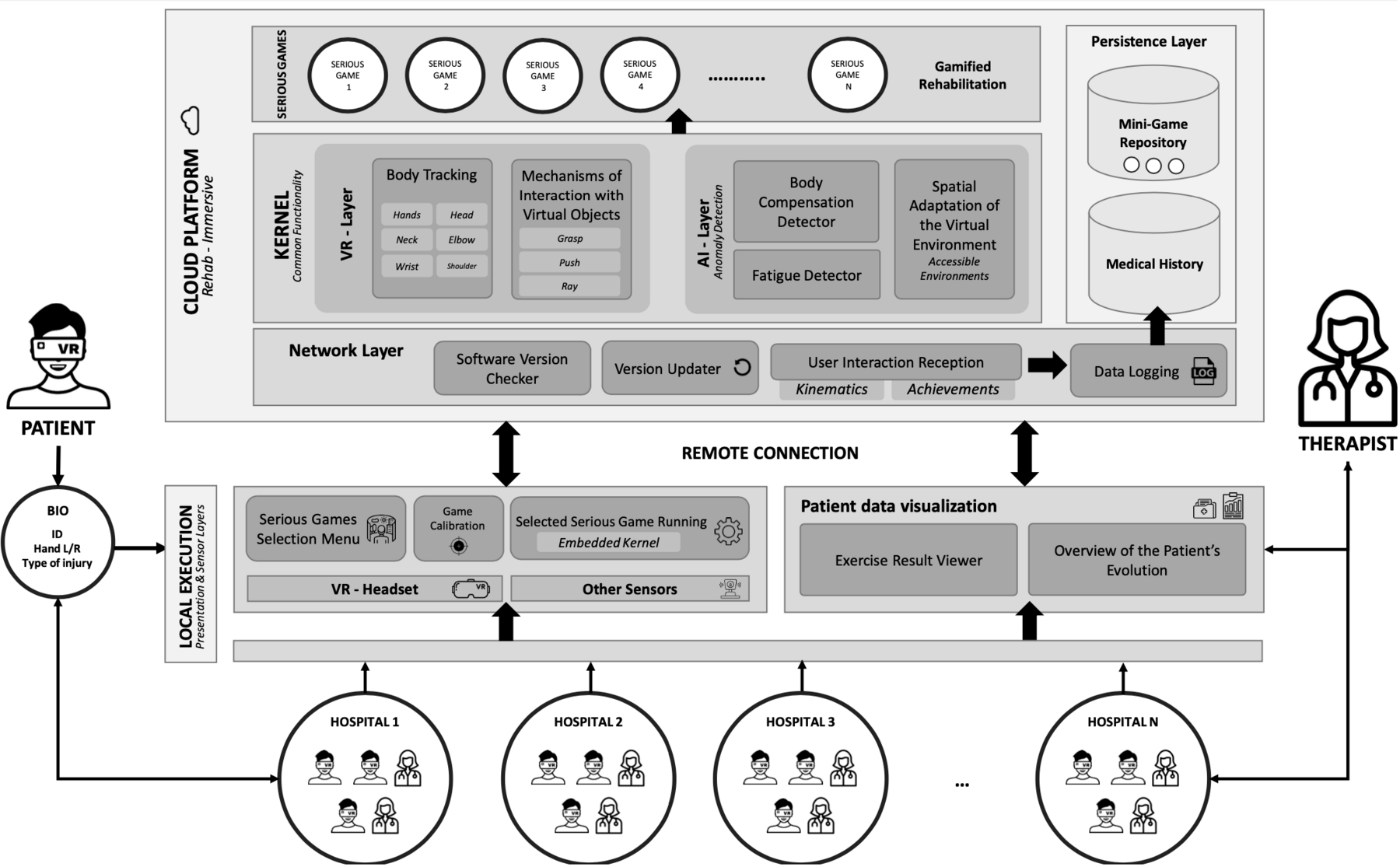
A cloud-connected rehabilitation platform for the upper limbs, built on immersive virtual reality and a multi-tier architecture with a reusable core.
From the headset to the therapist
Patients train in standalone headsets. Sessions are logged on the device, synchronised to the cloud and reviewed by therapists through web interfaces, with role-based access and data protection.
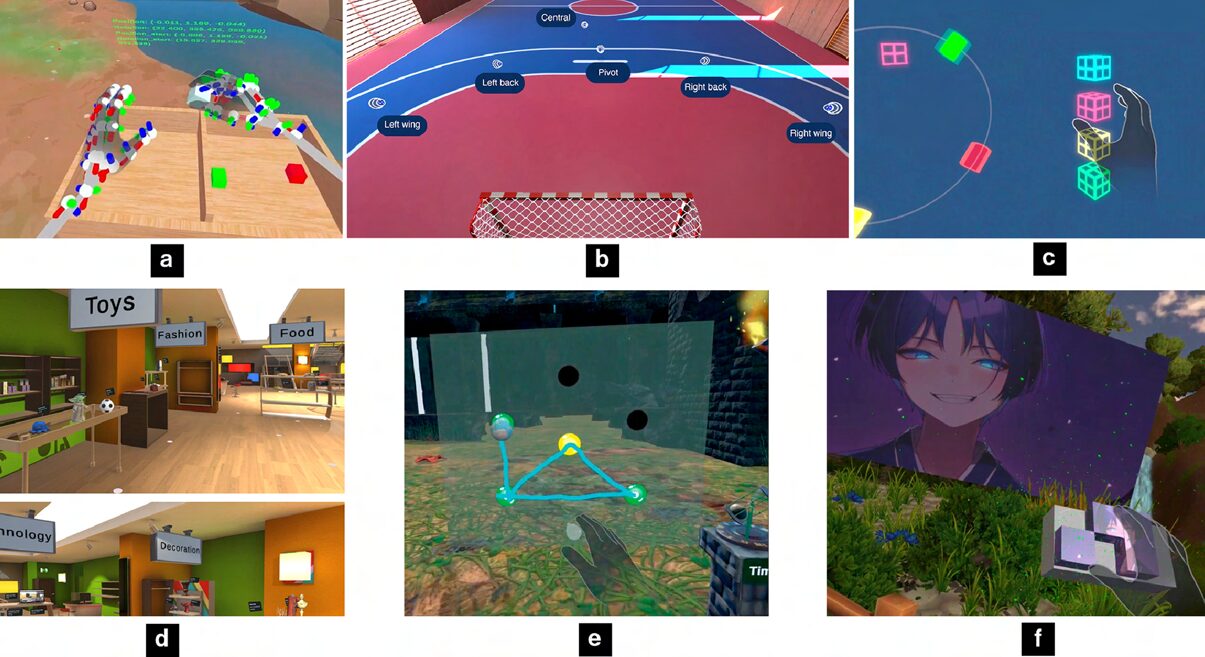
Natural interaction with the patient's own hands
Controllers demand fine motor control that people with tetraplegia often lack. Rehab-Immersive uses the optical hand tracking built into commercial headsets, so patients interact without holding anything.
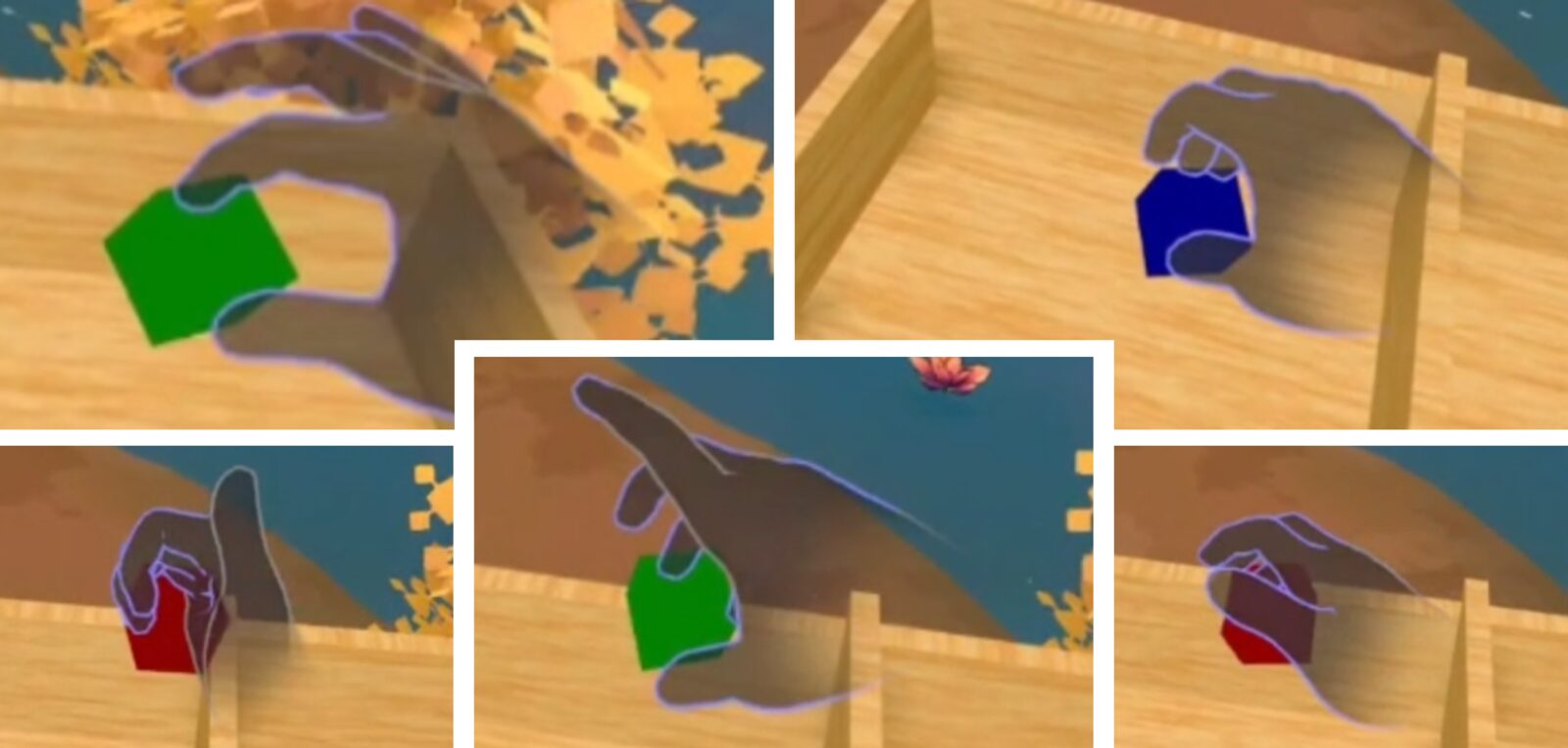
Adapted grips and pinches
Grab and pinch recognition tuned to residual hand function, including the tenodesis grip characteristic of cervical spinal cord injury, with audiovisual feedback.
Compensation monitoring
Head and trunk inclination are tracked to detect compensatory movements that would undermine the exercise.
Kinematic logging
Hand, head and grip data are stored frame by frame in a structured format for later clinical analysis.
Published as an open framework in SoftwareX (2023) · code: 10.5281/zenodo.22745988 · video
Watching posture, not just the hands
While the patient plays, the headset tracks head and neck inclination and the system flags trunk compensations. The same exercise recorded from inside the headset and from an external camera with pose estimation.
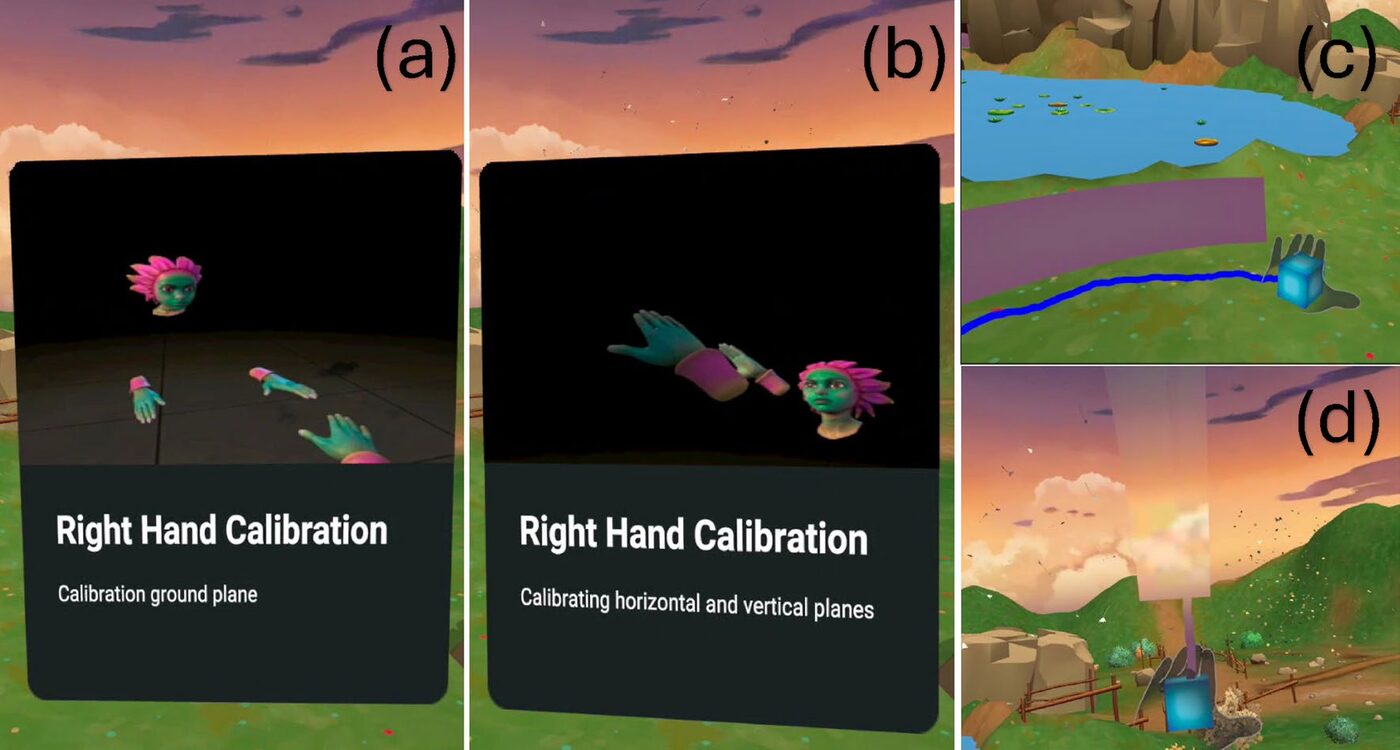
Automatic creation of accessible environments
Before playing, a short calibration measures the reachable and safe volume of each arm. The system then relocates every virtual element inside that volume, both at the start (static) and while the game runs (dynamic), so that no exercise requires an unsafe or compensatory movement.
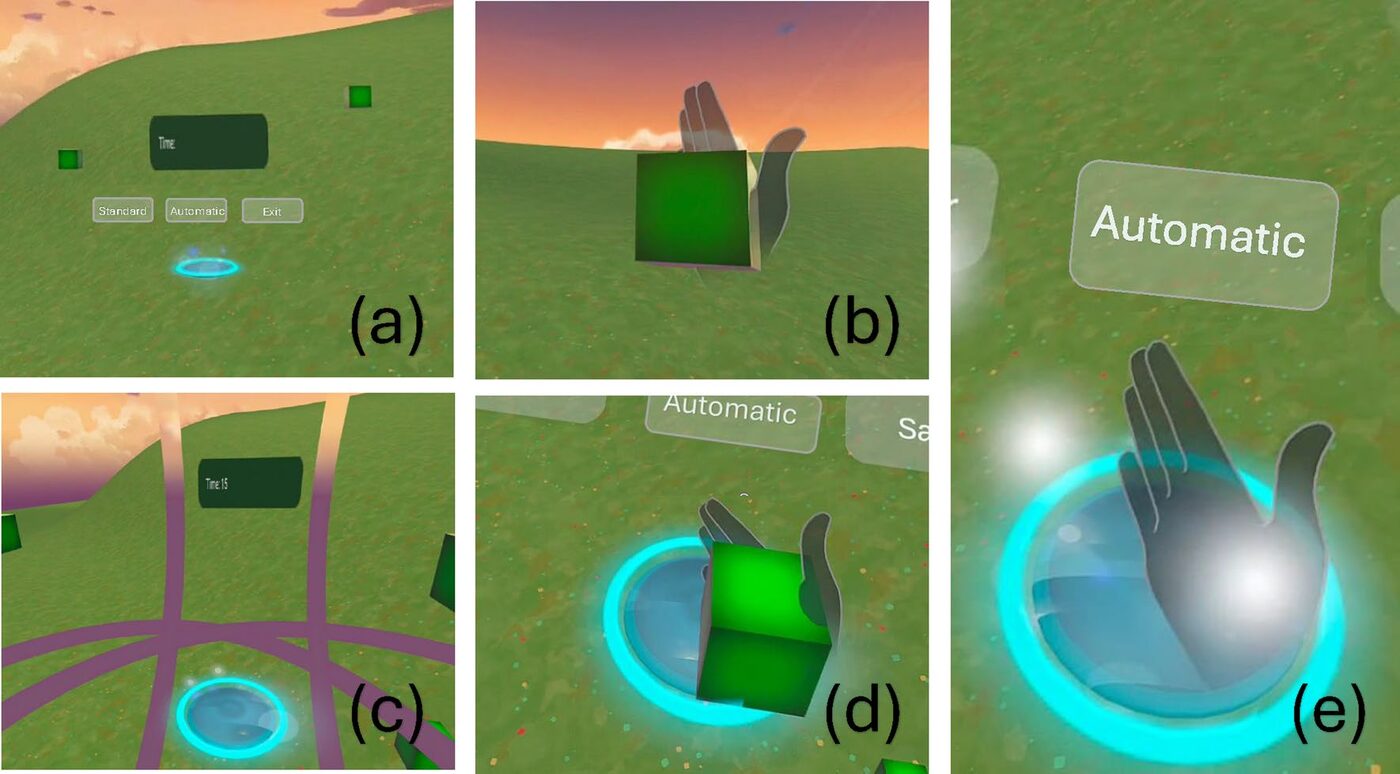
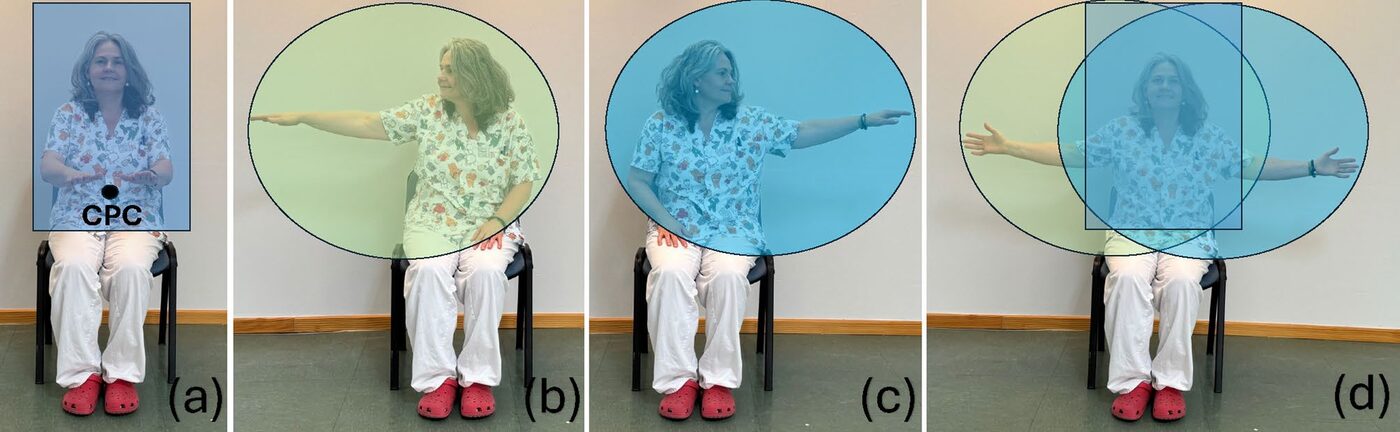
100% vs 62.5%
Task completion with automatic relocation compared with the standard layout (24 participants, 14 with SCI).
4.40 s vs 9.52 s
Mean time per block for patients, a 53.8% reduction.
1.29 / 5
Perceived complexity of the calibration; fit of the virtual space to real reach rated 4.67 / 5.
Published in Virtual Reality (2025, Q1) · Adobe Award for the best paper at CEIG 2024 · code: Accessible-Rehab
Fatigue detection and decision support
Adaptive fatigue detection
A model based on OWA operators and fuzzy logic classifies fatigue into four levels from task time, speed, incorrect movements and trunk compensation. Its error was below 15% with respect to self-reported fatigue, and its estimates matched therapists' observations in nine patients with spinal cord injury.
Physio Galenus
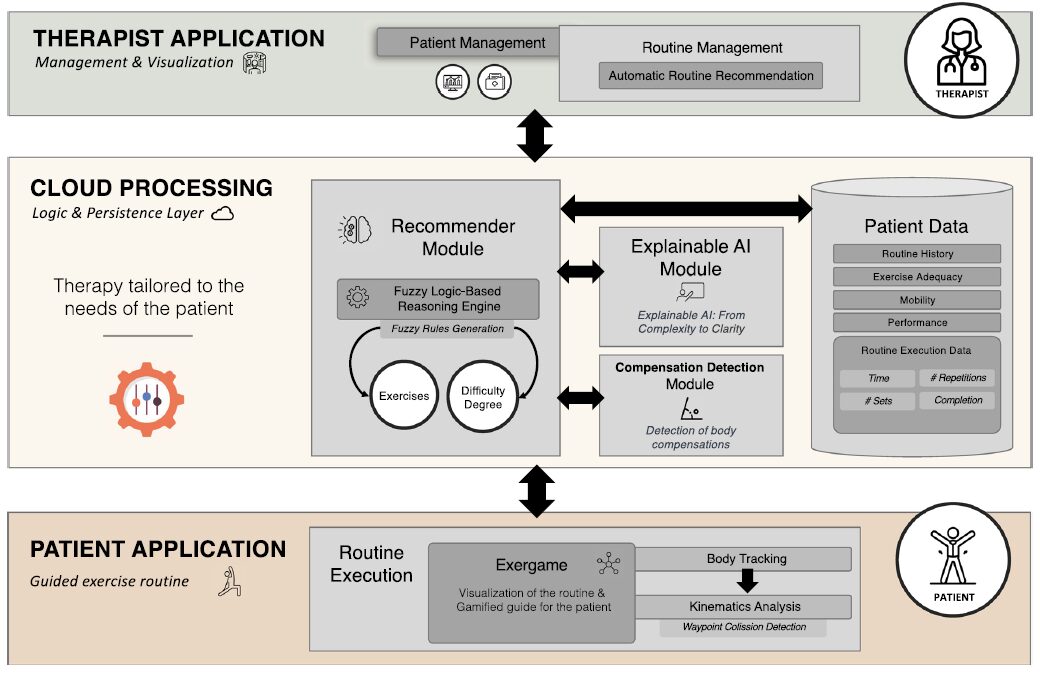
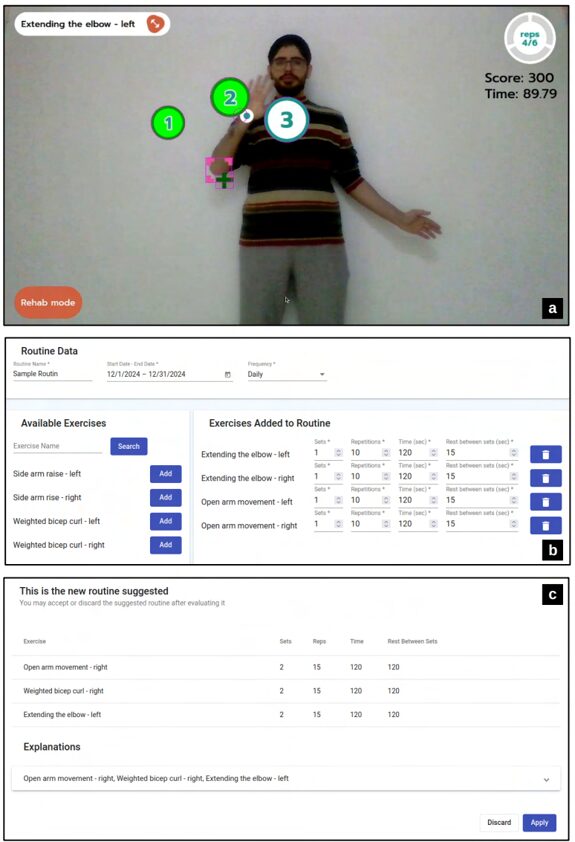
A modular web platform that lets therapists monitor patients' progress and automatically adjusts exercise programmes and routines from performance data, with explainable AI recommendations.
RIAH: Rehab-Immersive Analysis Hub
Session data used to live in CSV files inside each headset. RIAH centralises them: synchronisation from the headsets, version control of the serious games, a module to define analysis metrics, visual dashboards for therapists and role-based access with session tokens.
Document database (MongoDB) alongside a relational one, React front end, Spring back end and REST API, designed for GDPR compliance and ready to scale to other hospitals.
Browser-based kinematic analysis
A web tool replays the recorded movement of any session and computes clinical metrics (range of motion, smoothness and trajectory efficiency) with no headset, no installation and no motion-capture lab.
Software Impacts (2026) · code: RehabImmersive-Kinematic-Analysis
Occlusion-resilient mixed reality with smart objects
In the last phase the platform moved beyond purely virtual objects. Physical objects fitted with inertial and pressure sensors are fused with the headset's vision system, so the system keeps tracking manipulation even when the hand hides the object. The registered sessions of six participants are available as an open dataset. This work is the technological seed of the follow-up project Smart-RehabAR.
XR 2026
Presented at the International Conference on eXtended Reality (Salento, Italy).
AR-Rehab dataset
Synchronised IMU, pressure, pose and game events. 10.5281/zenodo.21898729 · CC BY 4.0
Hardware
Standalone headsets with built-in hand tracking (Oculus/Meta Quest family). Earlier desktop prototypes (RehabHand) used Leap Motion.